Does this sound familiar?

  • Your child becomes overwhelmed by noise, but to someone else it may simply look like bad behavior.
  • They cope well when they know what is coming, but a sudden change can derail the whole day.
  • They may take a joke literally.
  • They may say something too directly without intending to hurt someone.
  • Another child may persuade them to do something inappropriate because they do not recognize the provocation.
  • They may happily join a game but struggle to stay part of it once the social dynamics change.
  • You have already learned what helps. Their teacher simply may not know it yet.

Important information gets lost when it only exists in conversations.

How it works

From what you already know, to one page somebody can use.

No assessment, no scoring, no labels. Mostly checkboxes, about ten minutes, and you can stop anywhere.

  1. 1

    Tick what fits

    Mostly checkboxes. Skip anything that doesn't apply. Stop whenever you like — it saves as you go.

  2. 2

    We write it

    Your answers become plain, practical sentences. Nothing is invented and nothing is turned into advice.

  3. 3

    Look it over

    You see the card before it becomes a file. Change anything you want, or leave a section out.

  4. 4

    Hand it over

    Print it, or send the PDF. One page, and it takes fifteen seconds to read. Update it whenever something changes.

You don't write it. You recognize it.

You aren't writing anything. You're ticking things you already know, and the sentences come out the other end.

“If I cover my ears — let me step out for a few minutes. Fewer words, and don't ask me questions yet.”

Every time somebody new takes over.

  • A new teacher, or a substitute for the week
  • A new coach, at the start of a season
  • A first appointment with a therapist or a new provider
  • Summer camp — the forms go in months before the bus does
  • A sitter, or two weeks at Grandma's
  • A birthday party at somebody else's house

Most families who use this have a child who's autistic, has ADHD, sensory differences, anxiety, or a speech or learning difference. Many have no diagnosis at all — and you don't need one.

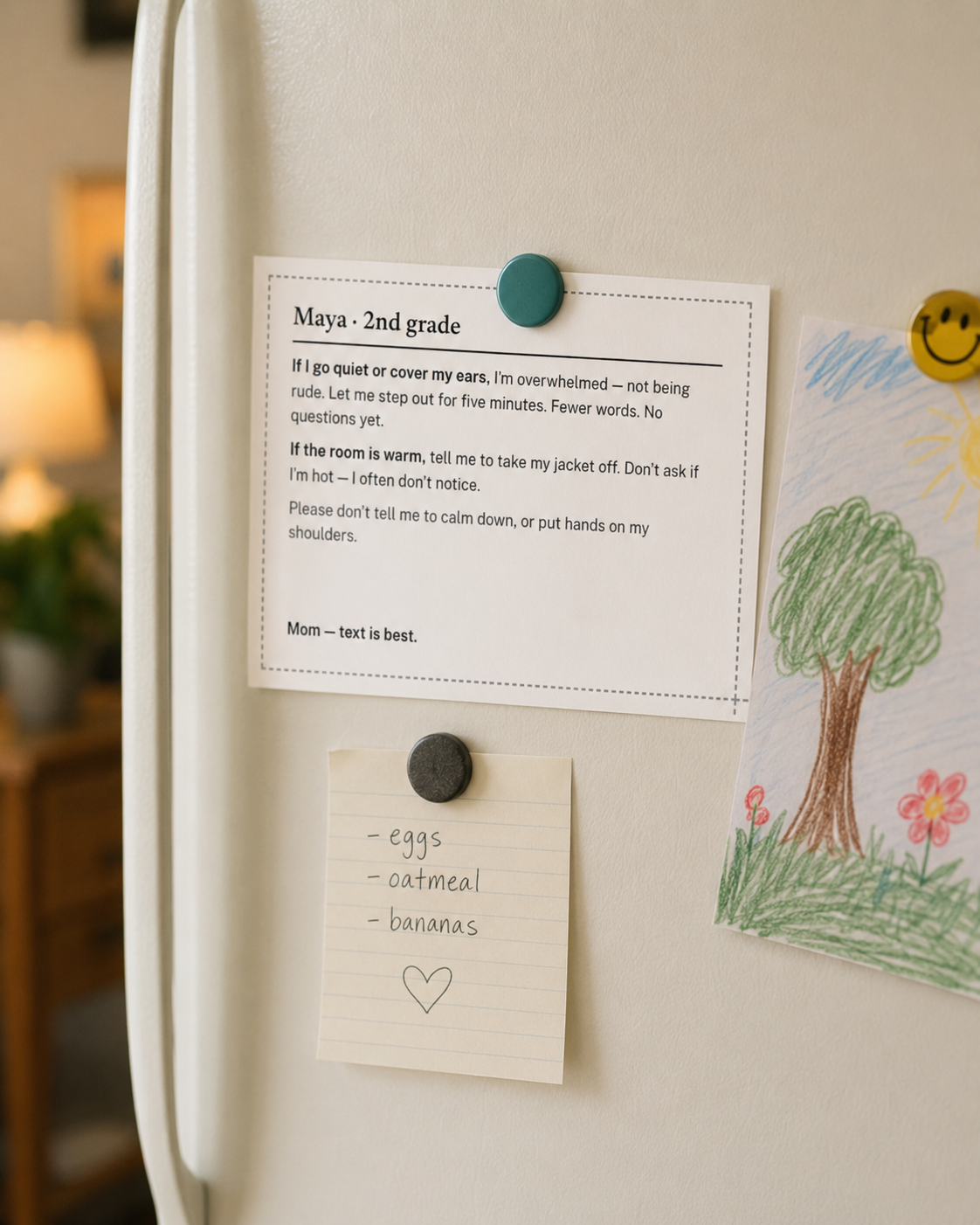
The card held to a fridge door with a magnet, next to a child's drawing.
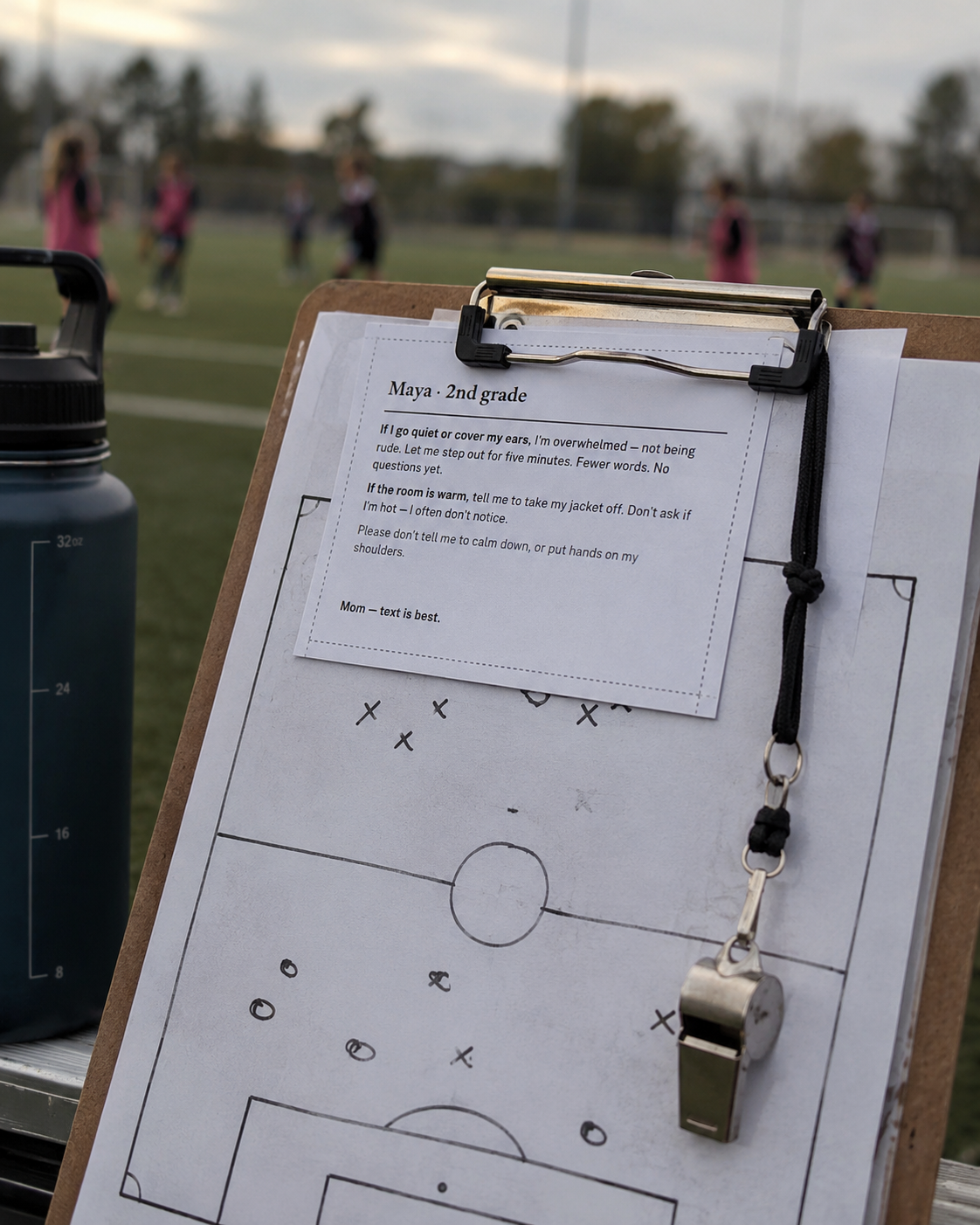
The card clipped to a coach's clipboard at the side of a field.

Written to be easy to receive.

No demands, no diagnosis, nothing that reads as a complaint. Most teachers want the day to go well as much as you do — they just don't have the information yet.

This doesn't expect anyone to figure it all out alone.

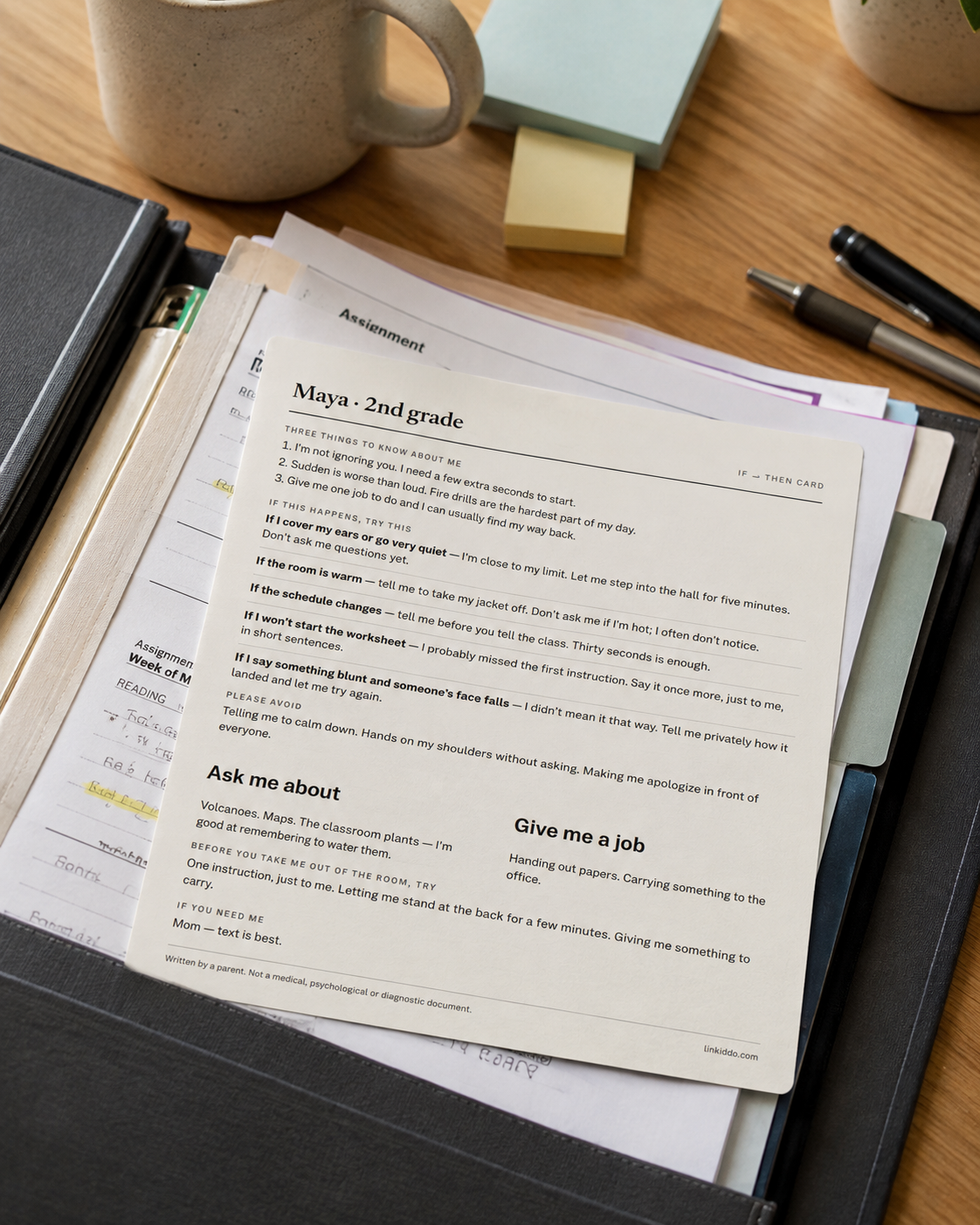
The card kept in a folder on a teacher's desk.

What comes out

One page, US Letter, if/then. This is a real one for a child who isn't real.

And the rest of it

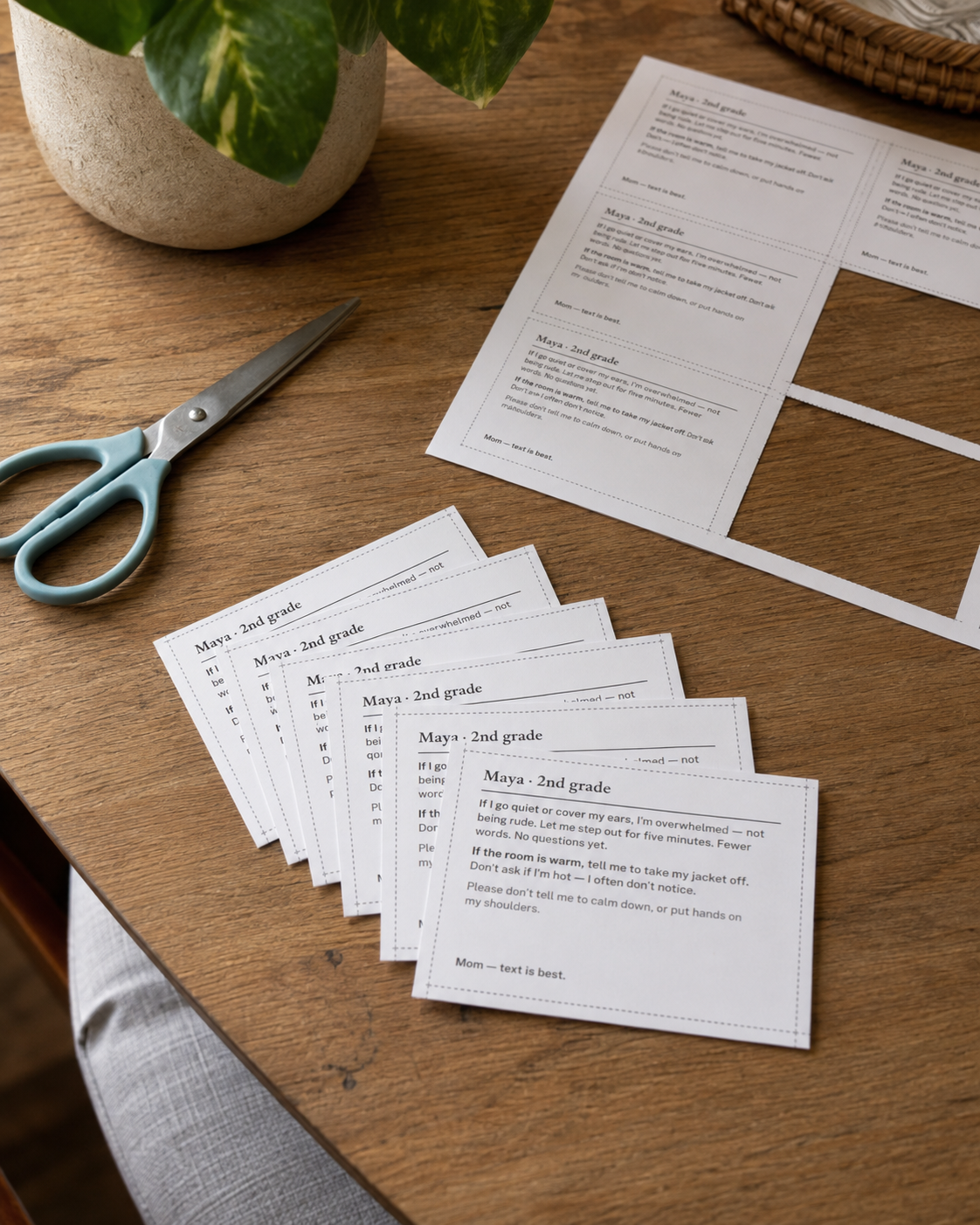
Eight cut-out carry cards beside the sheet they were printed on.
  • The card

    One page, if/then, for anyone. The product. Printed on US Letter, readable in fifteen seconds.

  • The full profile

    Three to four pages, for the teacher or case manager who'll spend the year with them.

  • Versions for each person

    Coach, therapist, camp counselor, substitute, sitter or grandparent. Same answers, different card.

  • When I feel overwhelmed

    A copy for the child, not the adult.

  • Before the first day

    A preparation checklist for you.

  • What we've already tried

    The things that don't work, so nobody wastes a month rediscovering them.

Start — about 10 minutes

$19, one time. One child, every version, forever. No subscription.